Standard asphalt emulsion sealer provides basic protection, but polymer enhancement takes performance to a different level. We use polymer-enhanced formulations designed to increase both hardness and flexibility once cured.
This combination matters because parking lots face competing demands. Surfaces need hardness to resist scuffing and tire marks from daily traffic. They also need flexibility to accommodate temperature-driven expansion and contraction without cracking.
Polymer modification delivers both properties in ways basic sealers cannot match. The result is a surface that resists both traffic wear and weather stress over extended service life.
Superior Aggregate Suspension and Retention
Aggregate content determines traction, wear resistance, and long-term durability. But aggregate only works if it’s properly incorporated and stays in place.
Our sealer mix is engineered to keep sand and aggregate evenly suspended during application, preventing the separation that creates inconsistent coverage. Once cured, it locks aggregate firmly into the surface, reducing the premature wear and roll-out common with lower-grade products after reopening to traffic.
This means consistent traction across the entire surface, even wear patterns rather than premature deterioration in high-traffic zones, and aggregate that stays embedded rather than loosening under traffic stress.
Reduced Scuffing and Tire Marks
Power-steering marks and tire scuffing don’t just look unprofessional. They indicate a sealer that hasn’t achieved adequate hardness and wear resistance.
The finished surface we create is formulated to minimize these marks, particularly in parking areas and high-turn zones where they’re most problematic. This isn’t about adding more sealer to hide problems. It’s about using materials that cure to appropriate hardness levels while maintaining necessary flexibility.
Improved Bond to Asphalt
Sealcoating only works if it stays bonded to your pavement. Poor adhesion allows water to work between the sealer and asphalt, causing sections to peel away and leaving the surface unprotected.
Our material selection prioritizes strong bonding characteristics that create a tight seal against moisture intrusion and oxidation. Combined with proper surface preparation, this delivers protection that lasts rather than cosmetic results that fail at the first sign of stress.
Long-Term Durability Focus
Here’s the fundamental difference in our approach: we select materials based on resilience and long-term wear resistance, not just how they look the day we finish.
A parking lot that looks great for six months then rapidly deteriorates doesn’t serve your needs. You need protection that maintains performance longer between maintenance cycles, reducing your lifecycle costs and minimizing disruption to your property operations.
Our material specifications reflect this priority consistently.
Application Process: Where Good Materials Become Great Results
The best sealer available delivers mediocre results without proper application. This is where many contractors compromise. They may use decent materials but apply them carelessly, wasting both product and your money.
Our application standards represent the other half of quality work.
Controlled Mixing and Application
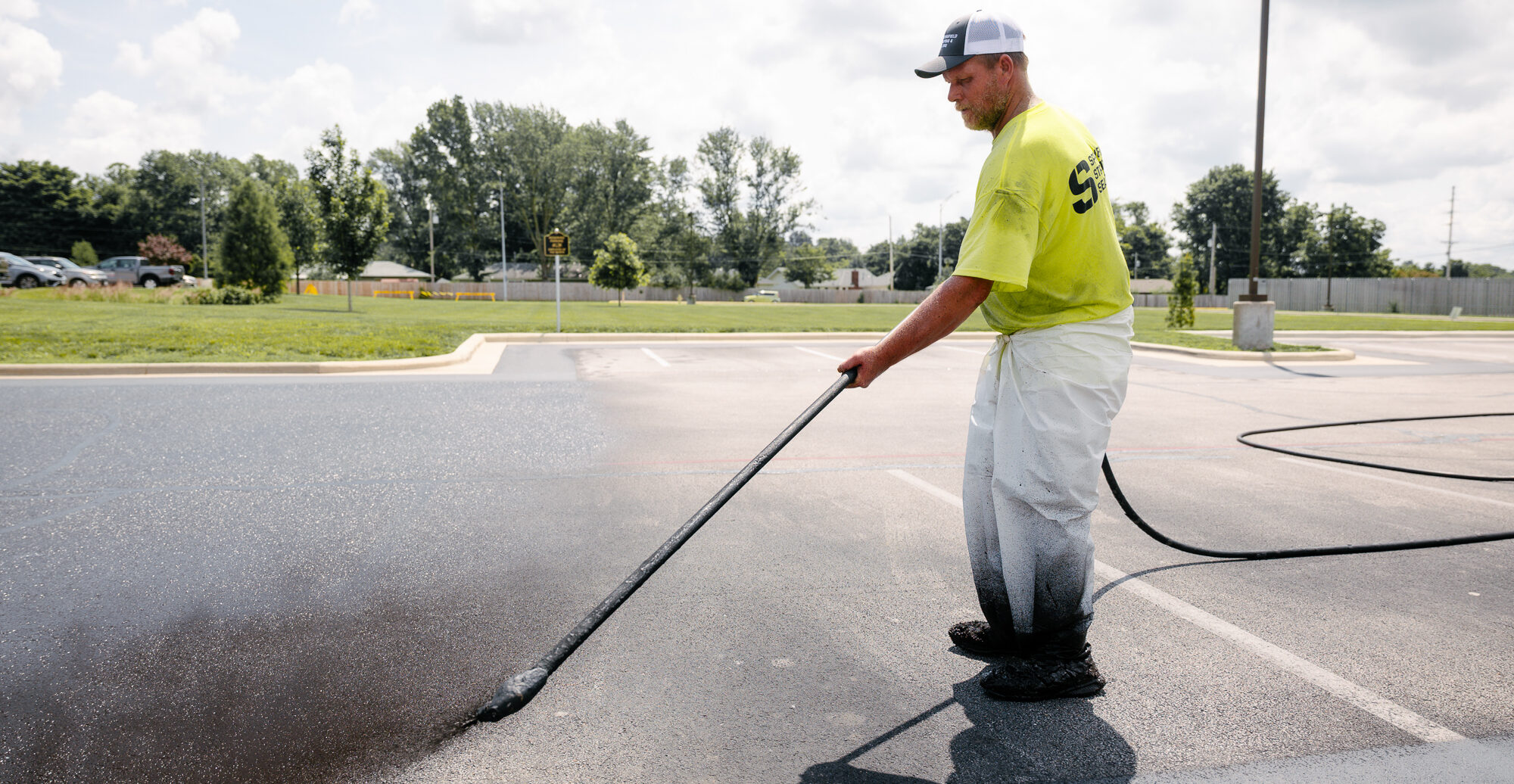
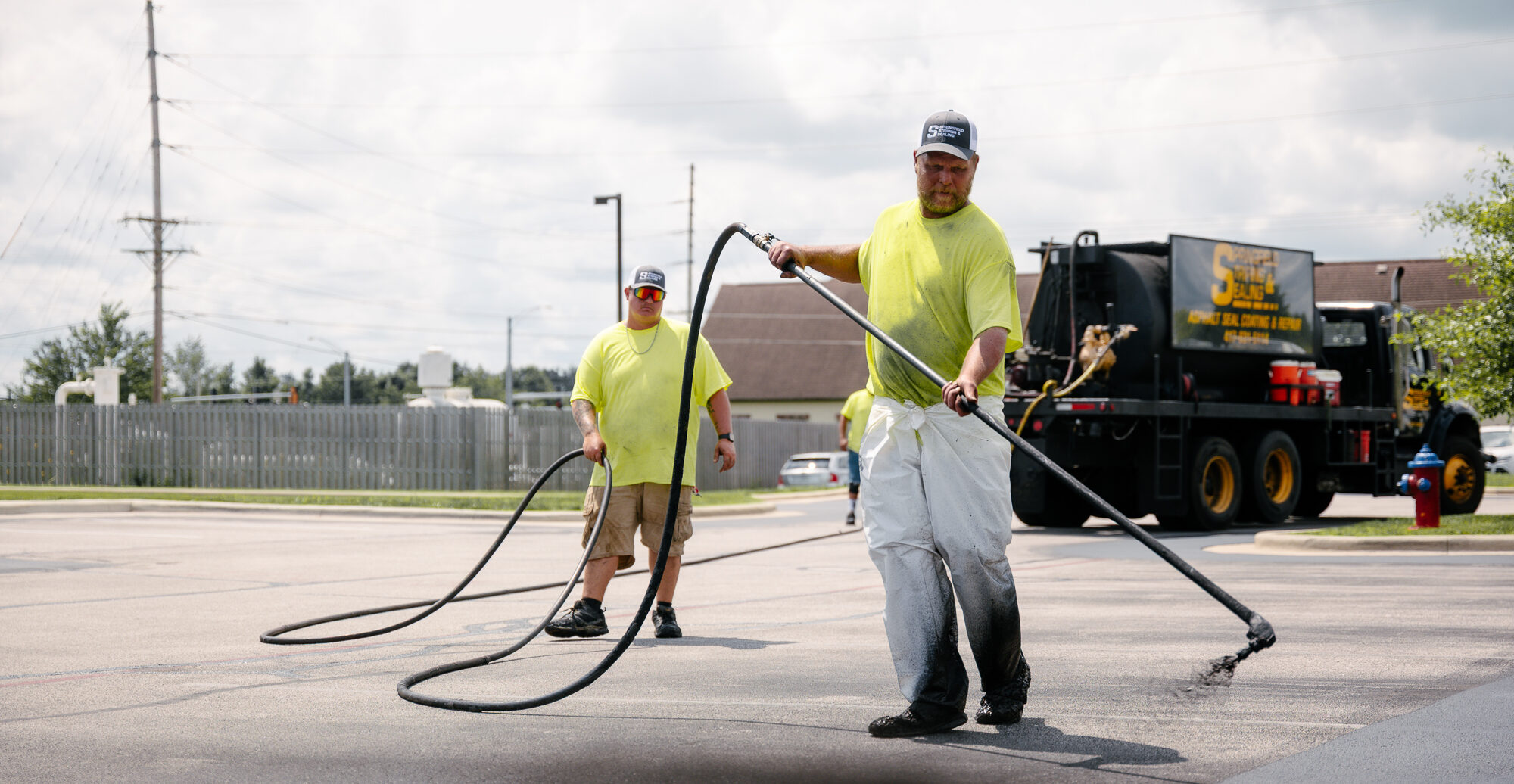
Materials are mixed under continuous agitation to ensure uniform consistency throughout the job. Aggregate and additives are incorporated in a controlled sequence to prevent clumping or uneven coverage.
This isn’t complicated, but it requires attention and proper equipment. Contractors who skip these steps produce inconsistent results that show up as variation in color, texture, and performance across your lot.
Equipment That Maintains Material Quality
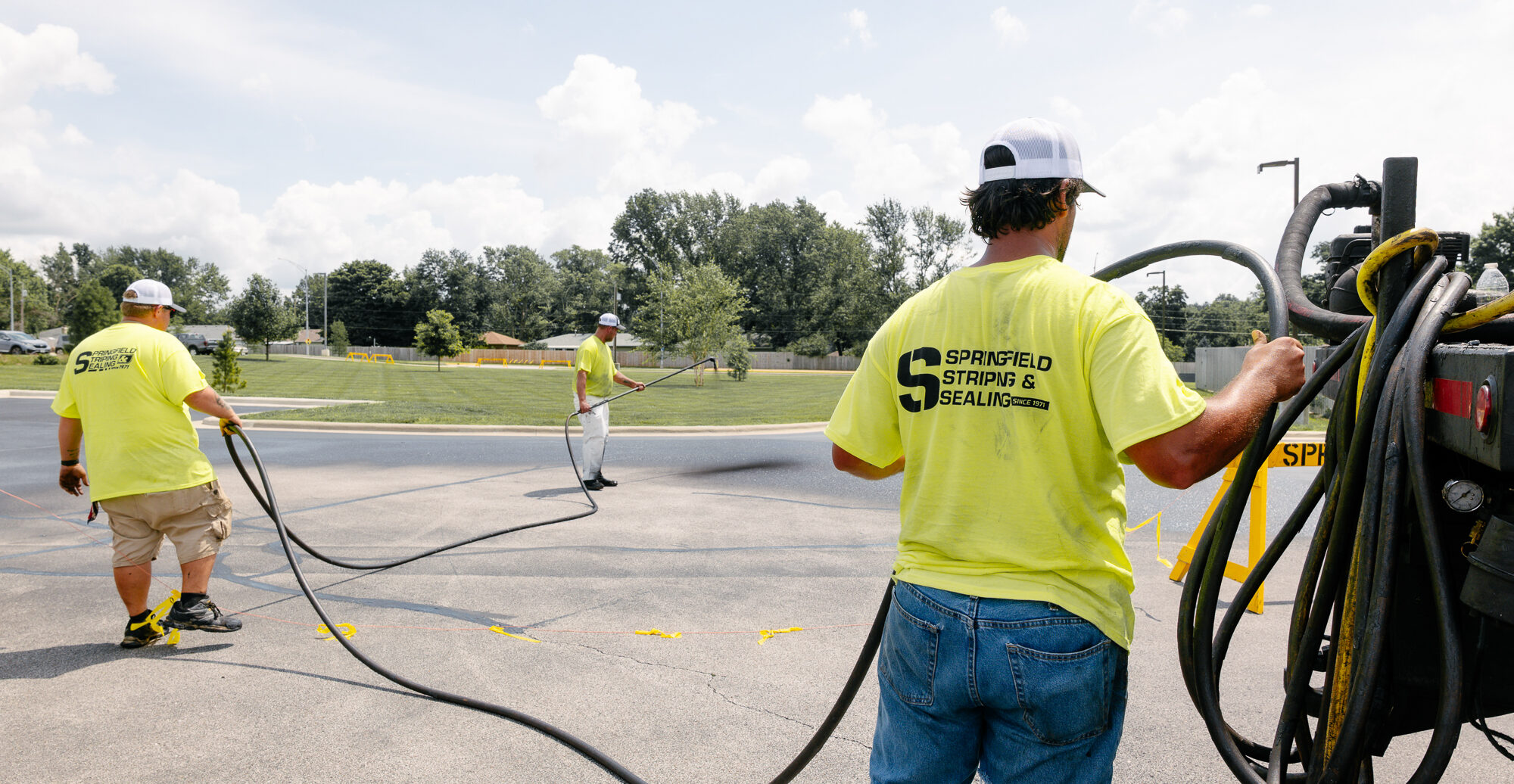
Our equipment is designed to keep materials properly mixed during application, ensuring consistent results from the first pass to the last. As sealer is applied, agitation continues, preventing settling or separation that degrades quality.
This matters especially on larger projects where material sits in equipment for extended periods. Without continuous mixing, you get different results at the beginning versus the end of the job.
Weather and Cure Standards
Sealcoating is applied only under appropriate temperature and moisture conditions to ensure proper curing. We don’t push schedule at the expense of performance.
Specifically, we monitor surface temperatures (minimum 50°F and rising), air temperature and humidity, precipitation forecasts for the following 24 hours, and sunlight exposure and shade patterns across your lot.
Scheduling is adjusted based on these factors to avoid the premature failure that comes from working in marginal conditions. This occasionally means delaying work, but it ensures the protection you’re paying for actually develops.
What This Means for Your Property
The material quality and application standards we maintain translate into tangible benefits.
Properly applied quality sealer typically lasts 3-5 years in commercial applications, versus 1-2 years for economy alternatives (if they last that long). Uniform coverage, minimal scuffing, and consistent color create the polished look that reflects well on your property and business.
Superior bonding and moisture resistance mean your asphalt actually receives the protection sealcoating is supposed to provide. And while quality work costs more initially, it reduces the frequency of reapplication and prevents the accelerated deterioration that leads to expensive repairs.
The Real Cost of Cheap Sealcoating
Property managers often ask why our prices run higher than some competitors. The answer is straightforward: we use better materials and don’t cut corners on application.
But consider the actual economics.
Economy sealcoating at $0.15 per square foot that fails in 12-18 months costs you more over time than quality application at $0.22 per square foot that performs well for 3 years. You’ll also incur additional costs scheduling and coordinating more frequent reapplication, accelerated asphalt deterioration from inadequate protection, professional appearance issues during the extended period when failed sealcoating looks terrible, and higher likelihood of needing crack filling and repair between sealcoating cycles.
Quality materials and application represent value, not unnecessary expense.
Our Commitment to Material Quality
We’ve built Springfield Striping and Sealing on the principle that our reputation depends on long-term performance. Every job we complete either enhances or diminishes our standing in this market.
That’s why we maintain material and process standards even when they cost more and take longer. Short-term profit isn’t worth the long-term damage to our reputation that comes from substandard work.
When you hire us, you’re getting materials selected for performance under commercial parking lot conditions, application procedures designed to achieve optimal results, weather standards that ensure proper curing, and equipment maintained to deliver consistent quality throughout each project.
We stand behind this work because we’re confident in what we deliver.
FAQ: Sealcoating Materials and Quality
How can I tell if a contractor is using quality sealer?
Ask specific questions about polymer enhancement, aggregate suspension, and performance characteristics. Quality contractors can explain their material choices clearly. Also request references you can inspect to see how their work performs over time.
Is the most expensive sealer always the best choice?
Not necessarily. The right material matches your property’s specific traffic patterns, exposure conditions, and performance requirements. We select materials based on what will deliver optimal results for your situation, not just the highest-priced option.
How long should quality sealcoating last?
In commercial applications with proper maintenance, quality sealcoating typically provides 3-5 years of effective protection. Lifespan varies based on traffic volume, weather exposure, and how well the underlying asphalt was maintained before sealcoating.
Can you put quality sealer over old, failing sealcoating?
We evaluate the existing surface condition first. If old sealer is peeling or has failed adhesion, it needs to be removed before reapplication. Putting new sealer over failed material just wastes money. It won’t bond properly or perform as expected.
Does sealcoating quality affect striping durability?
Absolutely. Properly cured quality sealer provides a stable surface for striping paint. Poor-quality sealer that remains soft or continues curing affects paint adhesion and can lead to premature striping failure.
Quality Work Pays for Itself
Quality sealcoating materials cost more and require more careful application than economy alternatives. There’s no way around this reality.
But the economics are clear: proper materials and application deliver lower lifecycle costs, better protection for your asphalt investment, and professional appearance that lasts. The “savings” from cheap sealcoating evaporate when you need reapplication in half the time and face accelerated pavement deterioration.
At Springfield Striping and Sealing, our material standards and application processes reflect our commitment to long-term performance. We’re not the cheapest option, and we’re okay with that. Our clients choose us because they understand that value and price aren’t the same thing.
Your parking lot deserves protection that actually works. Contact us to discuss how quality materials and professional application can extend your pavement life.