Most property owners don’t think about their pavement until there’s a pothole that’s been swallowing tires or a crack that’s been slowly spreading since last winter. By then, the question isn’t whether something needs to happen, it’s whether you repair what you have or replace it entirely.
That’s not always a straightforward answer. And anyone who tells you it is without looking at your pavement first isn’t being straight with you.
At Springfield Striping & Sealing, we’ve been evaluating asphalt across Southwest Missouri for over 50 years. We’re not here to upsell you. What we are here to do is give you an honest read on your pavement and help you understand what the right move is before a fixable problem becomes an expensive one.
Here’s how we actually think through the repair-versus-replace decision.
You can’t make a good call on asphalt repair or replacement without understanding what broke your pavement down in the first place. The same surface damage can come from very different causes and the cause determines the fix.
Knowing which of these is driving your pavement’s failure tells you whether you’re dealing with a surface issue or a base issue and that’s the difference between a repair and a replacement.
A lot of pavement that looks bad is still structurally sound. Surface wear and actual structural failure are different things, and confusing them leads property owners to spend money they don’t need to spend.
Your pavement is likely still repairable if:
When the base is still intact, the right services can add years of life to your pavement and hold off replacement considerably.
Every crack in your pavement is a water entry point. Crack sealing cuts off that entry point before moisture reaches the base layer. Left unaddressed, surface cracks develop into alligator cracking, that interconnected, web-like pattern that signals base failure and kicks the cost of repairs up significantly. Early crack sealing is one of the highest-return maintenance investments you can make.
Driveway sealcoating and parking lot sealcoating do three things: they protect the binder from UV damage, create a barrier against water and chemical infiltration, and restore the surface appearance. Applied on the right schedule, typically every two to four years depending on traffic and exposure, a quality sealcoat can extend asphalt life by years.
The “right schedule” matters as much as the product. Sealcoating over failing pavement doesn’t fix anything. Sealcoating healthy pavement keeps it healthy.
One thing worth knowing: not all sealcoat is the same. Diluted mixes look fine on application day. The difference shows up in how the surface holds up through winter. We use full-strength materials and follow manufacturer spec, not because we have to, but because that’s the Springfield Standard, and watered-down materials mean premature wear on your dime.
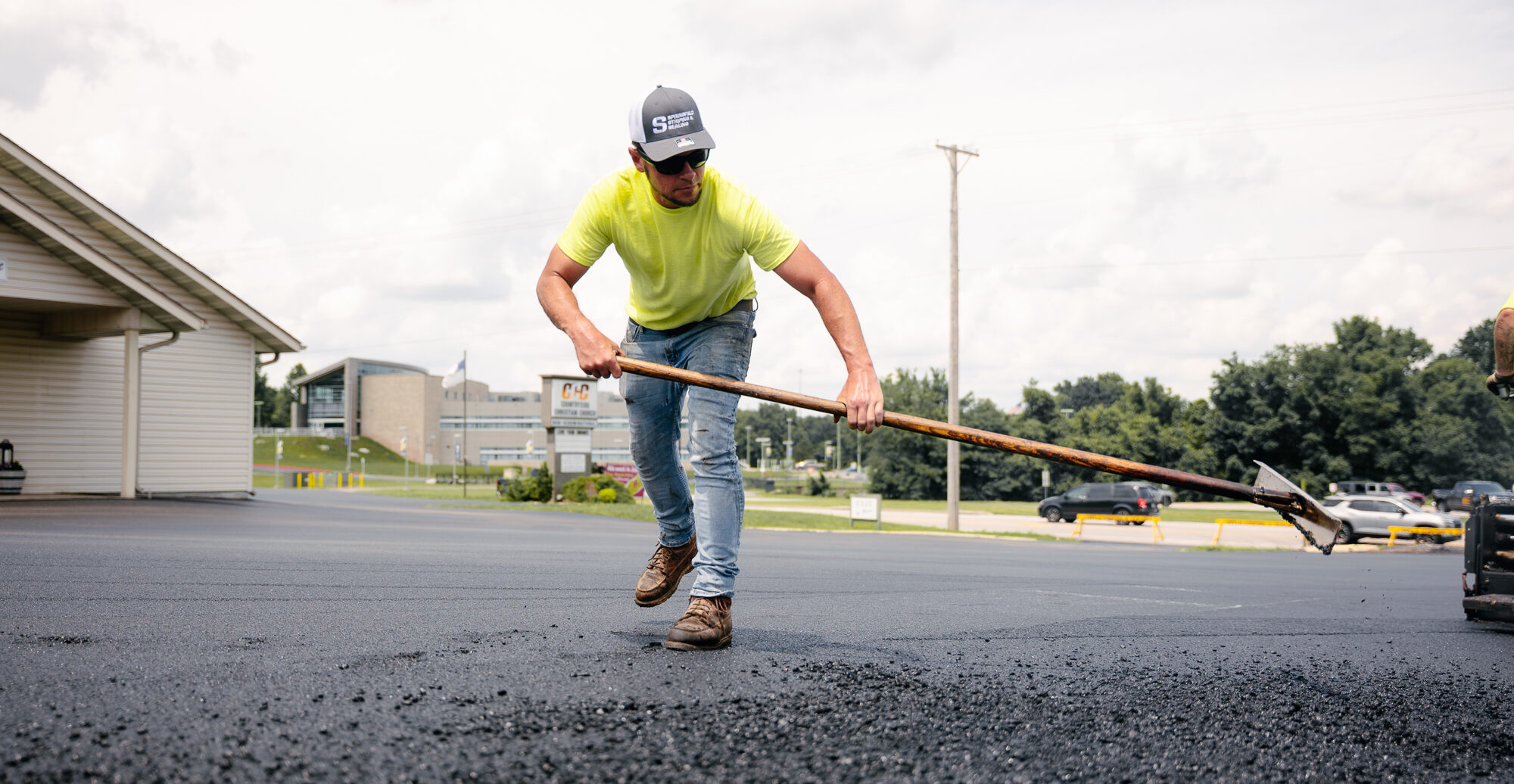
Potholes, sunken sections, and edge crumbling don’t automatically mean the whole lot needs to go. Asphalt patch repair removes the damaged material, addresses any base issues underneath, and rebuilds the area properly. A quality asphalt patch is structural, it’s not just filling a hole, it’s restoring what failed and preventing the failure from spreading.
The key word there is “quality.” Throw-and-roll patching is a temporary fix. A proper asphalt patch repair done by an experienced asphalt paving contractor addresses the cause, not just the surface symptom.
Maintenance has limits. When structural failure has spread beyond isolated areas, patching becomes a losing battle, you’re spending money to extend the life of pavement that’s already failing from the ground up.
Widespread alligator cracking across large sections of the lot is the clearest signal. That pattern points to base failure, not surface wear. No amount of sealcoating fixes a compromised base. Asphalt resurfacing, laying a new surface layer over the existing pavement, can work if the base is still sound but the surface is gone. If the base has failed, you’re looking at a full replacement.
Recurring potholes in the same locations after repair tell you the same thing. If a patched pothole keeps coming back, the base in that spot is compromised. You’re not dealing with a surface problem.
Soft or unstable areas or pavement that flexes or sinks under traffic weight means the sub-base has been weakened by moisture. This isn’t a surface fix. The pavement above is only as strong as what’s beneath it, and when the base goes, the surface follows.
Excessive patchwork throughout the lot is worth stepping back and evaluating honestly. When a parking lot has been patched repeatedly and still looks rough, the cumulative cost of continued maintenance often approaches, or exceeds, the cost of a proper overlay or replacement. At that point, commercial asphalt paving contractors or residential asphalt paving contractors with the scope to do the job right are worth the conversation.
Drainage problems that keep returning after surface repairs point to a slope or grading issue that patch work can’t solve. Standing water is one of the fastest ways to accelerate base failure. If water has nowhere to go, it finds its way into your pavement instead. These problems often require a more comprehensive corrective solution than a few repairs alone can provide.
It’s not choosing the wrong service. It’s waiting.
Many parking lots that eventually require costly reconstruction could have had years of additional life with proactive crack sealing and sealcoating. The window for those interventions doesn’t stay open indefinitely. Once structural failure spreads beyond isolated spots, repair options narrow, and costs climb significantly.
Preventative maintenance isn’t exciting. It also isn’t optional if you want to protect the investment you’ve already made. A well-maintained asphalt surface can last considerably longer than neglected pavement, helping property owners avoid premature replacement costs altogether.
The age of the pavement, traffic patterns, drainage, base condition, and maintenance history all factor into the right call. There’s no formula that works across every property, and any recommendation that doesn’t account for your specific situation isn’t worth much.
What we do is look at your pavement, tell you what we actually see, and give you honest guidance on the most cost-effective path forward, whether that’s crack sealing, working with a sealcoating contractor, asphalt patch repair, asphalt resurfacing, or a full asphalt replacement conversation.
If you’re in the Ozarks area and wondering where your pavement stands, contact Springfield Striping & Sealing to schedule a pavement evaluation. We’ll give you a straight answer.
Asphalt repair addresses localized or surface-level failures: crack sealing, asphalt patch repair, and sealcoating when the base layer is still structurally sound. Replacement involves removing the existing pavement and rebuilding, which is necessary when the base has failed or damage is widespread. Asphalt resurfacing falls in between: a new surface layer applied over a sound base that no longer has a viable surface.
The key indicator is whether the damage is isolated or widespread, and whether it’s surface-level or base-level. Isolated potholes and cracking with a stable, firm surface under foot point toward asphalt patch repair. Widespread alligator cracking, recurring failures in the same spots, soft areas under traffic, and persistent drainage problems suggest the base has failed and more comprehensive work is needed.
A well-maintained asphalt surface can last 20 to 30 years or more. Regular driveway sealcoating or parking lot sealcoating and timely crack sealing are the two highest-impact maintenance investments for extending pavement life. Neglected pavement typically requires replacement significantly sooner.
Most surfaces benefit from sealcoating every two to four years. The right interval depends on traffic volume, sun exposure, and the condition of the surface. A qualified asphalt sealcoating contractor can evaluate your pavement and recommend a schedule that makes sense for your property.
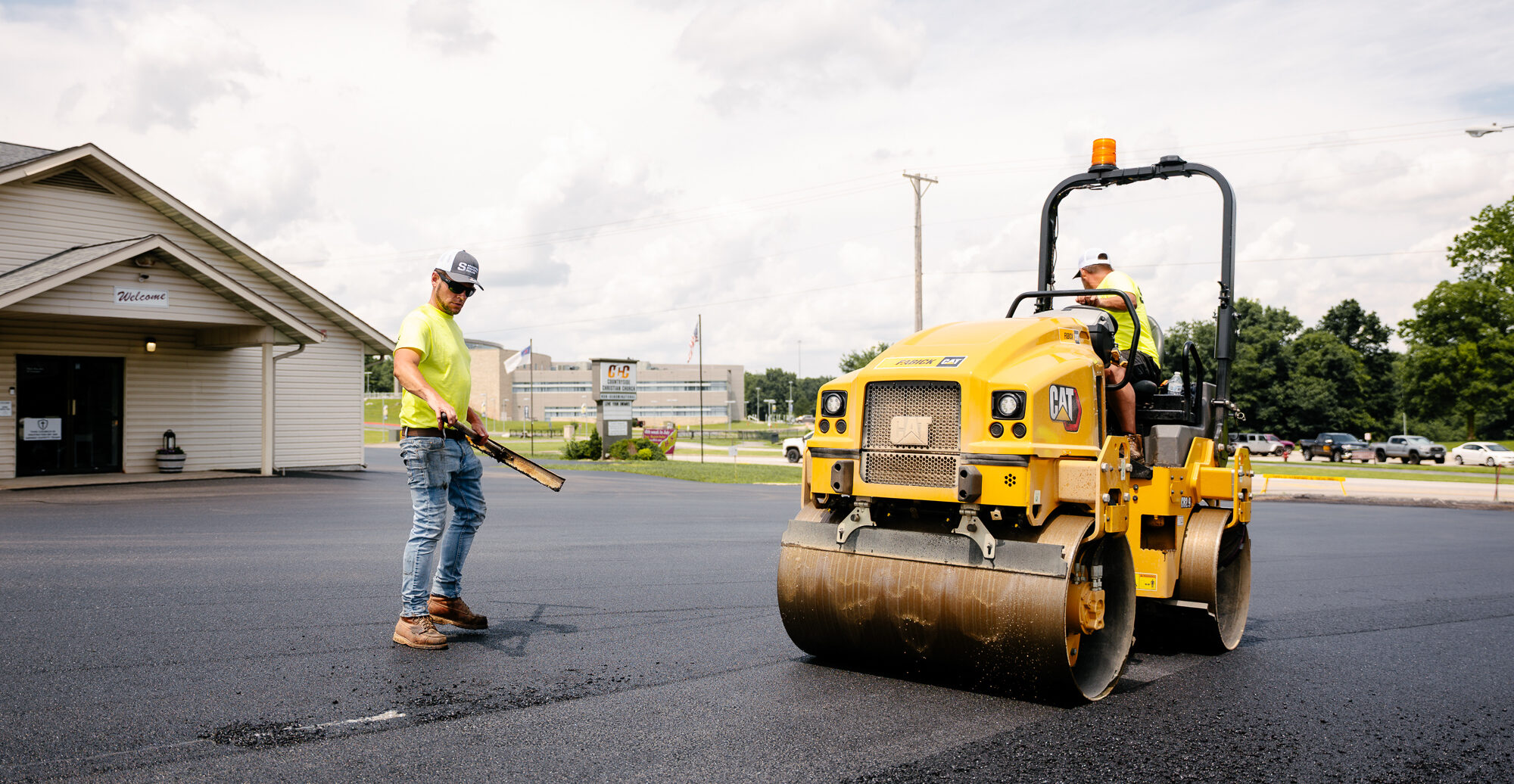
Asphalt resurfacing means applying a new layer of asphalt over the existing pavement. It’s a cost-effective middle ground when the base is still structurally intact but the surface layer has worn out. It’s not appropriate when the base has failed, in that case, resurfacing over a compromised foundation will fail prematurely and end up costing more.
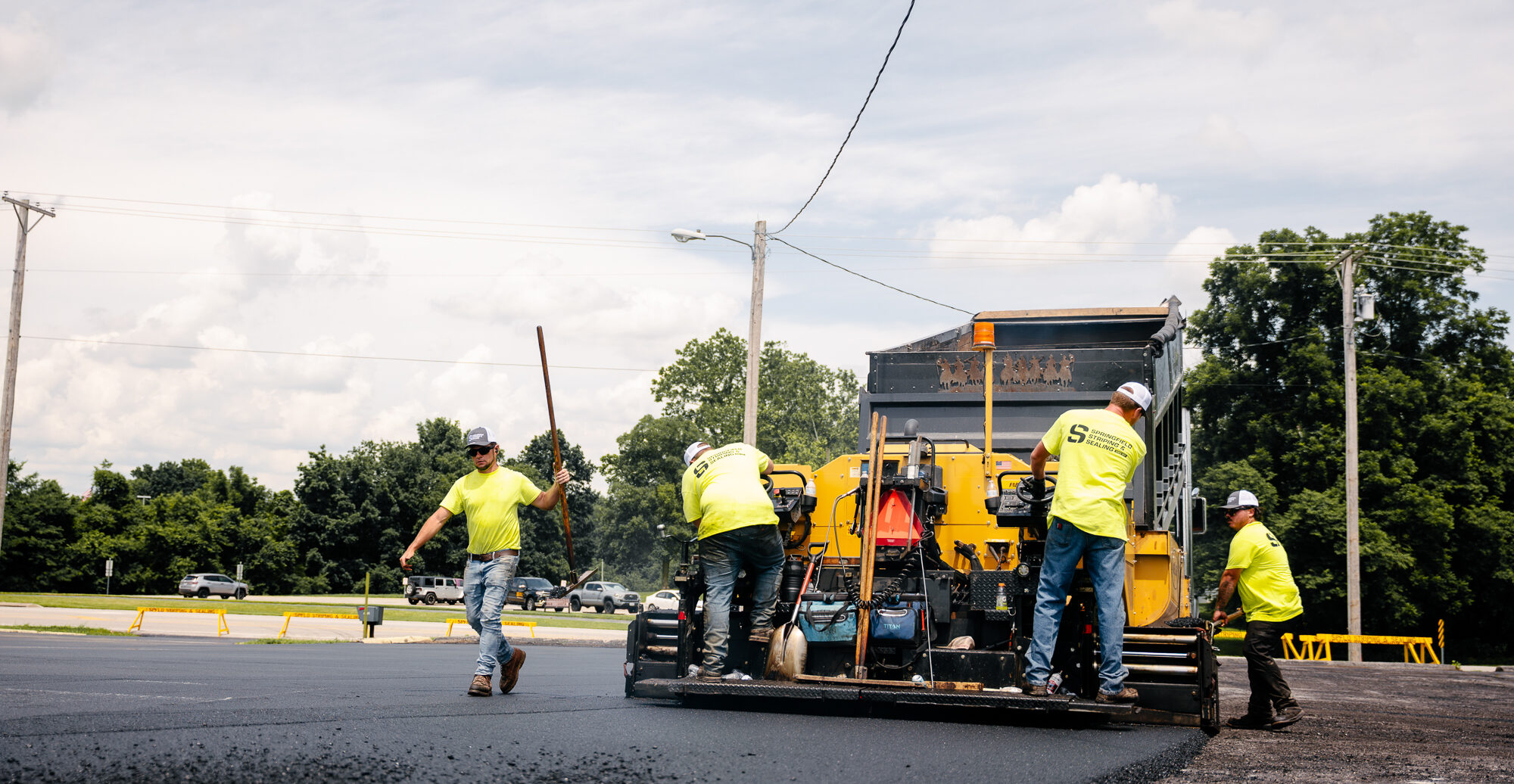
For anything beyond basic surface maintenance, experience matters. Commercial asphalt paving contractors have the equipment, materials knowledge, and technical expertise to properly diagnose base issues, prep surfaces correctly, and deliver repairs that hold. A general contractor or handyman can fill a pothole. Getting the base right, matching materials properly, and ensuring drainage is addressed, that requires an experienced asphalt paving company.
Yes. We serve the greater Ozarks region, including Branson and Southwest Missouri. Reach out to confirm coverage for your location.